
Support for Patriot air-and-missile defense is a case study for the industrial base
Manufacturing scale, global sustainment, and next-gen tech are becoming inseparable.

Manufacturing scale, global sustainment, and next-gen tech are becoming inseparable.

As the Army begins fielding NGC2 to I Corps, software tools will be critical to enable interoperability and getting new capabilities to units faster.


Dwindling stockpiles and lessons learned from Ukraine and Iran are driving urgent needs for revamping manufacturing.
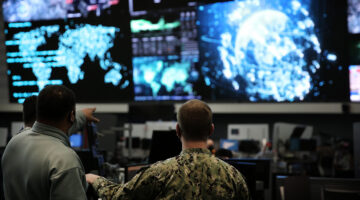
"It's about driving big outcomes and giving the secretary and the president options, more options. We want to move away from things that look like persistent engagement," according to Brig. Gen. William Wilburn, deputy principal cyber advisor for the DoD.

Nightmare scenarios of AI-engineered super-plagues or nuclear bombs have, understandably, attracted the most attention. But there is lots of lower-hanging fruit for terrorists.
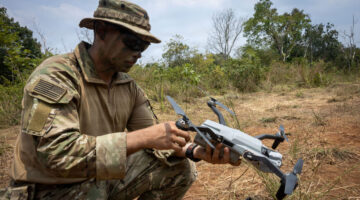
DAWG is Trump administration initiative that essentially absorbed the Biden-era Replicator initiative designed to acquire thousands of low-cost “attritable” drones, particularly for use in the Pacific.
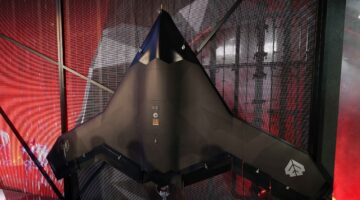
The UAV is "designed to detect and engage high-value, time-sensitive targets at long range," the company said.


Architecture that linked sensors, C2, RF effects, and lasers into a distributed c-UAS kill chain.

The proliferation of AI is forcing the USAF to rethink cyber defense, and a new regional defense pact could shake up arms sales in the Middle East.
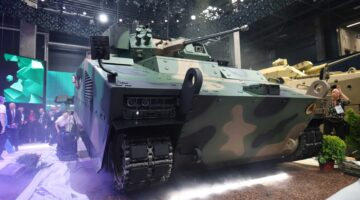
Polish defense firm PGZ said the next step will be to build fully functional prototypes for testing.
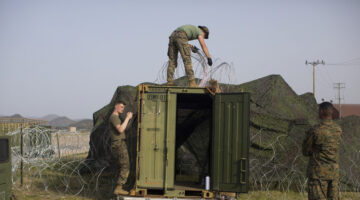
The Secure Space Network will deploy close to 50 SCIFs around the nation to improve access to classified information for smaller businesses to do work with the military.
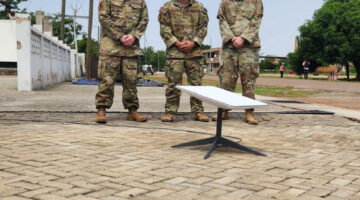
"Before we go spend quadruple the cost" on bespoke tech, "there some things that we can do" to make a commercial option work, said Brig. Gen. Shane Taylor.

From AI adoption and agentic systems to Zero Trust and cyber resilience, Breaking Defense’s latest eBook brings together key reporting from DoDIIS 2026 on the technologies and strategies shaping the future of defense intelligence.
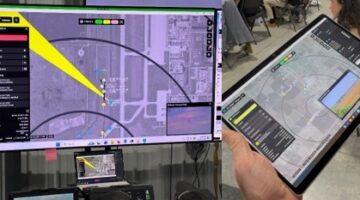
Architecture that linked sensors, C2, RF effects, and lasers into a distributed c-UAS kill chain.

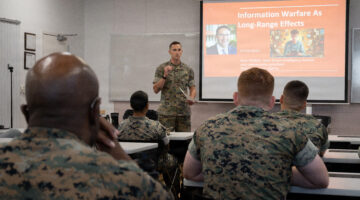
"Being able to tell the commander you don't need to do something is actually a pretty powerful message, as well."
The effort awards $127 million to Palantir and $65 million to Anduril.


Models that replicate real-world physics streamline design, testing and iteration processes.